 |
Genevieve, the ExperimentBook, Music, and Lyrics by David Jay WillisContact Email: favedave@gmail.com |
|
Paris, 1889. Based on a true story. Professor Legrand, an intense and fiercely ambitious intellectual, claims that his new science of criminology will prove that criminal behavior is inherited. That criminals are born, not made. When a depraved married couple is convicted of a series of cold-blooded murders, Legrand seizes upon this circumstance: he arranges for these two lifelong criminals to have a baby while in jail. He then takes the child, Genevieve, and raises her in his wealthy household while never revealing her true origin. If his theory is correct — and he firmly believes it is — then the girl will turn into a criminal despite growing up with every advantage in life. Thus the Professor’s legacy in the world of science will be assured, which is all that matters to him. 18 years later, Genevieve ventures out into the world, enticed by inducements into the criminal life placed in her path by Professor Legrand. Will Genevieve succumb to her “criminal” nature? Who will win in the battle between Nurture and Nature? What follows is a tragedy no one could foresee. As of March 31, 14 of the 24 songs are finished, and 10 have demos recorded. The outline is complete, and the script itself is 50% done. The piece has several unusual new elements: in many of the songs, ballet dancers will be swapped out for the actors halfway through. This is accomplished by casting ballet dancers similar in appearance to the actors and of course in identical costumes. Then, by using the Black Art stage magician’s technique, the transition will be seamless and undetectable by the audience. (This is how stage magicians appear and disappear and make objects appear to float.) Then the ballet dancers will transition back into the actor/singer for the end of the song. Please note that these are true ballet soloists, not “dancers with some ballet” as often seen in Broadway shows. This has never been done in a musical before. The first scene portrays an execution of a criminal by guillotine. Again, the stage magician’s technique used with this illusion will make it seem real (but not bloody). It’s played for shock, but not gore. The production value is on the level of Phantom of the Opera or Les Mis, as the Eiffel Tower appears in two scenes, a horse enters and then is ridden off in one scene (easily achieved with a wrangler), a video wall is omnipresent upstage, and the set construction will require certain (easily constructed) properties to enable the seamless swapping of actors and ballet dancers. It takes place from 1889 to 1908 in Paris, from the grand opening of the Eiffel Tower in 1889 to the dawn of the new millennium in 1899 to the full flowering of the Belle Epoque in 1908. Big sets, sweeping music, larger-than-life characters, deep story, big questions and big feelings. That is Genevieve, the Experiment. DAVID JAY WILLIS, composer, lyricist, book writer. Mr. Willis began his show business career in the corps de ballet with Stuttgart Ballet, American Ballet Theatre, and other companies when they toured the Washington D.C. area. Wanting to talk while performing, he transitioned to being a standup comedian and did a one man show at over 200 colleges and universities in the U.S., touring for years. He then moved to Los Angeles, where he worked as a writer and actor on may shows such as Frasier, The Golden Girls, Cybill, Working Girl with Sandra Bullock, and many others. He also served as a script consultant and punch up writer for many talk shows and comedians. A member of BMI, he also wrote music for a few pilots, short films, and features. He then raised over $1 million online from strangers to write and direct the delightful and quirky Christmas movie “I’ll Be Next Door for Christmas.” After discovering the true story of a man who raised a girl from a criminal family to prove she’d be a criminal in the end, Mr. Willis knew it had to become a musical. |
|
|
|
|
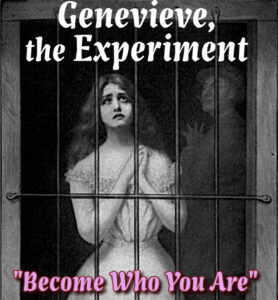
Genevieve, the Experiment
Book, Music, and Lyrics by David Jay Willis
Contact Email: favedave@gmail.com
Paris, 1889. Based on a true story. Professor Legrand, an intense and fiercely ambitious intellectual, claims that his new science of criminology will prove that criminal behavior is inherited. That criminals are born, not made.
When a depraved married couple is convicted of a series of cold-blooded murders, Legrand seizes upon this circumstance: he arranges for these two lifelong criminals to have a baby while in jail. He then takes the child, Genevieve, and raises her in his wealthy household while never revealing her true origin.
If his theory is correct — and he firmly believes it is — then the girl will turn into a criminal despite growing up with every advantage in life. Thus the Professor’s legacy in the world of science will be assured, which is all that matters to him.
18 years later, Genevieve ventures out into the world, enticed by inducements into the criminal life placed in her path by Professor Legrand. Will Genevieve succumb to her “criminal” nature? Who will win in the battle between Nurture and Nature? What follows is a tragedy no one could foresee.
As of March 31, 14 of the 24 songs are finished, and 10 have demos recorded. The outline is complete, and the script itself is 50% done.
The piece has several unusual new elements: in many of the songs, ballet dancers will be swapped out for the actors halfway through.
This is accomplished by casting ballet dancers similar in appearance to the actors and of course in identical costumes. Then, by using the Black Art stage magician’s technique, the transition will be seamless and undetectable by the audience. (This is how stage magicians appear and disappear and make objects appear to float.) Then the ballet dancers will transition back into the actor/singer for the end of the song. Please note that these are true ballet soloists, not “dancers with some ballet” as often seen in Broadway shows. This has never been done in a musical before.
The first scene portrays an execution of a criminal by guillotine. Again, the stage magician’s technique used with this illusion will make it seem real (but not bloody). It’s played for shock, but not gore.
The production value is on the level of Phantom of the Opera or Les Mis, as the Eiffel Tower appears in two scenes, a horse enters and then is ridden off in one scene (easily achieved with a wrangler), a video wall is omnipresent upstage, and the set construction will require certain (easily constructed) properties to enable the seamless swapping of actors and ballet dancers. It takes place from 1889 to 1908 in Paris, from the grand opening of the Eiffel Tower in 1889 to the dawn of the new millennium in 1899 to the full flowering of the Belle Epoque in 1908. Big sets, sweeping music, larger-than-life characters, deep story, big questions and big feelings. That is Genevieve, the Experiment.
DAVID JAY WILLIS, composer, lyricist, book writer. Mr. Willis began his show business career in the corps de ballet with Stuttgart Ballet, American Ballet Theatre, and other companies when they toured the Washington D.C. area. Wanting to talk while performing, he transitioned to being a standup comedian and did a one man show at over 200 colleges and universities in the U.S., touring for years. He then moved to Los Angeles, where he worked as a writer and actor on may shows such as Frasier, The Golden Girls, Cybill, Working Girl with Sandra Bullock, and many others. He also served as a script consultant and punch up writer for many talk shows and comedians. A member of BMI, he also wrote music for a few pilots, short films, and features. He then raised over $1 million online from strangers to write and direct the delightful and quirky Christmas movie “I’ll Be Next Door for Christmas.”
After discovering the true story of a man who raised a girl from a criminal family to prove she’d be a criminal in the end, Mr. Willis knew it had to become a musical.